
How Arrest Warrants Work in Suffolk City
Virginia Code § 19.2-72 supplies the probable-cause framework that governs Suffolk City. A magistrate, or another official with authority, reviews a sworn complaint or an investigation. If the standard is met, an arrest warrant or a summons can issue, carrying a return court or an instruction to appear. That step starts the criminal process. It is not a trial and not a final case outcome. Suffolk's Magistrate's Office is where new complaints and initial bail questions enter the system. The magistrate cannot offer legal advice or recommend a lawyer. For a pending warrant, call Suffolk Police first, then confirm the case and the next step with the return court itself.
Suffolk City Arrest Warrants Start at the Magistrate
The Magistrate's Office reviews new complaints around the clock. It also handles criminal warrants, search warrants, emergency orders, and initial bail. Keep one thing straight, though. A magistrate is not the trial judge, and the office does not work as a general records counter. Outstanding-warrant and summons questions get directed to Suffolk Police instead. For a fresh complaint, the magistrate can hear facts under oath and weigh whether probable cause supports process in Suffolk City. A warrant may return to General District Court for a misdemeanor or a preliminary felony matter, or to Circuit Court for a felony case. Once the return court has it, that court sets the later dates.
Arrest Warrants: What They Contain
One warrant record can pull together several pieces: the initiating complaint, the case docket, a bond decision, and police service entries. OCIS may list the court, case number, defendant, offense date, hearing date, charge, and code section. It does not promise the full warrant online. Nor does it promise the affidavit, bond terms, or current service status. Use the case number and ask the Suffolk City clerk which document is actually available.
| Issuer | Magistrate or other authorized officer, with date and signature. |
|---|---|
| Case / charge | CR / GT case number plus the offense listed. |
| Return court | The clerk and court that control the next setting. |
| Bond | Release terms set by a magistrate or judge, if any. |
| Service | Attempt, execution, or return information that may be held by police. |
How Suffolk City Arrest Warrants Move to Court
The local sequence runs from complaint to probable-cause review, then process, service, appearance, and later case action. Suffolk Police's Warrant/Fugitive Unit records and serves warrants issued by local magistrates and courts. Once service happens or a person appears voluntarily, a magistrate or judge takes up release and the next event. From there the clerk keeps the docket. Each Suffolk City office holds a different piece of the process. A single online case page may not answer every question, so plan on asking more than one.
- Identify the return court and case number.
- Ask SPD whether it has an outstanding warrant or summons.
- Call the return court clerk before appearing.
- Ask about counsel, surrender, bond, next date, and written confirmation.
How Warrants Get Served in Suffolk City
The Suffolk Police Warrant/Fugitive Unit records and serves warrants from Suffolk magistrates and courts. The staff directory separates the Warrant Clerk, Warrant Officer, Fugitive Unit Sergeant, and Central Records. Calling Central Records will not get you a warrant answer. That is a different question. For outstanding-warrant or summons routing in Suffolk City, use the Warrant Clerk at 757-514-7922, and ask which court issued the process.
Suffolk Arrest Warrant Service by SPD
Older Suffolk Police annual reports describe a Warrant/Fugitive Unit that recorded and served warrants, ran warrant sweeps, and handled extraditions. Treat those reports as dated examples only. They do not measure current staffing or workload. Virginia law also lets law-enforcement officers, and certain jail officers, execute warrants anywhere in the Commonwealth when a person is already confined. Do not assume the Suffolk Sheriff's Office publishes or confirms every criminal warrant. Suffolk City sources point the public to SPD for warrants, and the Sheriff's Office posts no criminal-warrant database of its own.
Arrest Warrants, Summonses, and Bench Warrants
An arrest warrant lets police take a person into custody once probable cause has been found. A summons orders someone to appear and may carry no arrest power at all. A bench warrant or capias usually follows a missed setting or a court-order event in a case already open. The label matters in Suffolk City. The court and the next action can differ with each one. Ask the clerk which process is active rather than assuming all three papers work alike.
| Process | Typical start | Local question |
|---|---|---|
| Arrest warrant | Probable-cause review | Which return court? |
| Summons | Direction to appear | What is the court date? |
| Bench warrant / capias | Missed date or order | What recall or appearance is required? |
Suffolk Search Warrants and Arrest Warrants Differ
A search warrant and an arrest warrant do different jobs. The first authorizes a search of a named person, place, or thing for evidence. The second authorizes custody on its own terms. The Suffolk Police archive holds dated releases about search-warrant execution, sometimes alongside partner agencies. Those releases describe agency operations. They are not a personal warrant-check service, a public roster, or proof that a separate arrest warrant exists in Suffolk City. Virginia Code § 19.2-52 sets out search-warrant requirements, and the Police archive offers dated public releases rather than a current status search.
Handling an Arrest Warrant in Your Name
Call Suffolk Police to identify the return court, then call that court's clerk before you show up. Ask whether counsel should arrange a voluntary surrender, a motion, or another court-approved step. Suffolk City publishes no universal surrender window and posts no public bond schedule. If an arrest happens, the magistrate or judge sets release conditions. A lawyer can explain the risks and help you plan the next move.
Call first: confirm the location, process, and release procedure with SPD and the issuing court. Do not act on a threatening caller's payment demand.
Suffolk Arrest Warrant Surrender Needs a Call First
The Magistrate's Office sits beside Western Tidewater Regional Jail and runs 24/365. That convenience does not mean there is a walk-up surrender desk for every court warrant, though. Before you turn yourself in on a Suffolk City warrant, call the Police Warrant Clerk and the court to learn where to report, what identification to bring, and who sets bail. The Western Tidewater Regional Jail inmate-information page handles custody questions only; it is not a warrant search and cannot tell you whether a warrant is still active.
Call the SPD or the issuing clerk in Suffolk City first, since custody status and warrant status are separate records.
Suffolk City Warrant Status and Western Tidewater Jail
Western Tidewater Regional Jail handles custody, and that is where its role ends. It sits in Suffolk City apart from the Police Warrant/Fugitive Unit and the court clerk. The jail's home page names the facility and gives its public contact route. Jail staff can answer who is in custody; Suffolk Police or the issuing court handles questions about a warrant, a case number, or a court date.
A facility page cannot confirm whether a Suffolk City warrant is active or has been served.
Suffolk Federal Arrest Warrant Records
Federal cases run through a different court system. Suffolk City falls in the Norfolk Division of the Eastern District of Virginia, and PACER is the official federal docket route; Virginia OCIS will not search federal cases. The U.S. Marshals Service offers fugitive-investigation contacts rather than a public warrant lookup. For a federal process question, a federal criminal-defense lawyer or the federal clerk is the better stop. The Norfolk courthouse page posts access and security details for visitors.
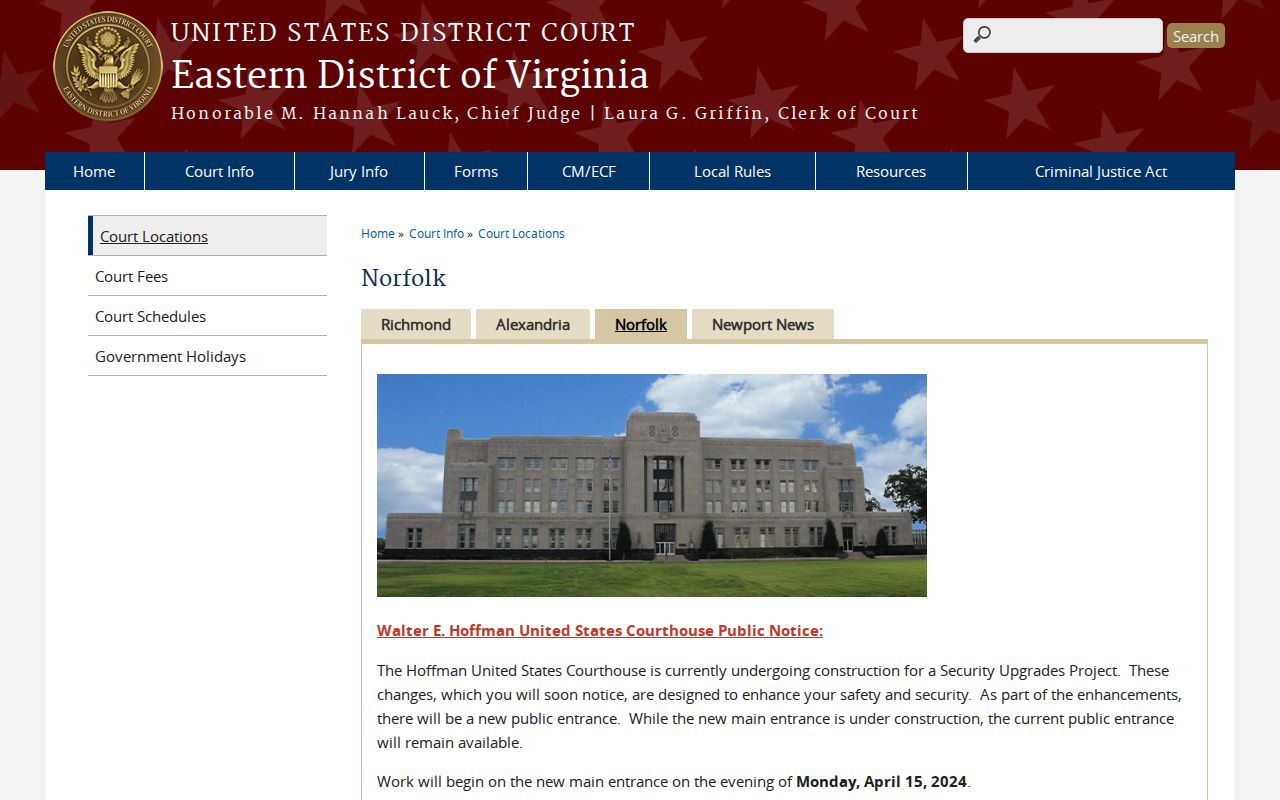
Use federal contacts for federal court process, not the local Suffolk search.
Suffolk Arrest Warrants and Bond
Virginia allows release on recognizance, unsecured bond, secured bond, cash, surety, and conditions when a judge orders them, so terms hinge on the charge and the court's decision. Remember what a bond does: it secures appearance. It does not pay a fine or end a case. Suffolk City publishes no general bond amount or accepted payment method. Ask the court or jail which office takes the funds, and keep your receipt.